

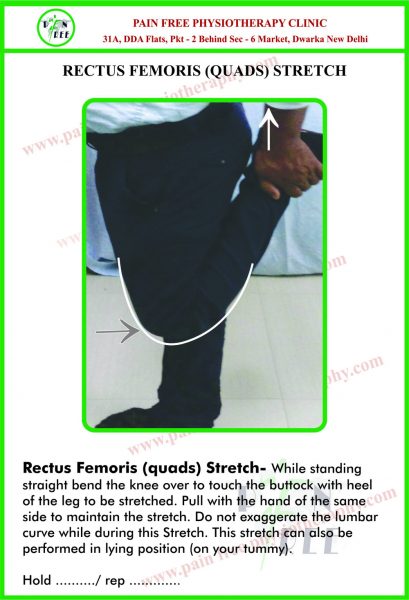
The quads stretch is a simple but effective exercise that targets the quadriceps muscles located at the front of the thigh. These muscles play an important role in everyday activities such as walking, running, climbing stairs, and standing up from a seated position. When the quadriceps become tight, they can create tension around the knee joint and may even affect hip movement.
Stretching the quadriceps regularly helps improve flexibility, reduce muscle stiffness, and support better lower-body movement. Many physiotherapists include this stretch as part of rehabilitation and injury prevention programmes.
At Pain Free Physiotherapy and Chiropractic Clinic, stretching exercises like the quads stretch are often recommended to improve muscle balance and relieve tightness. If you are looking for professional physiotherapy in Dwarka or trusted physiotherapy in Delhi, guided stretching routines can help maintain muscle health and reduce the risk of injuries.
Why Quads Stretch Is Important
The quadriceps are among the strongest muscles in the body, but they are also prone to tightness due to overuse or long periods of sitting. When these muscles lose flexibility, they can pull on the knee joint and surrounding structures.
Regular quadriceps stretching helps maintain proper muscle length and joint mobility. It also improves blood circulation in the thigh muscles, which supports recovery after physical activity.
Physiotherapists frequently recommend this stretch for people experiencing thigh tightness, knee discomfort, or limited flexibility in the lower body.
How to Do a Quads Stretch
The most common version is the standing quadriceps stretch, which is easy to perform and requires no equipment.
Steps to follow:
- Stand upright with your feet hip-width apart.
- Bend one knee and bring your heel toward your buttocks.
- Hold your ankle with the same side hand.
- Keep your knees close together and maintain an upright posture.
- Hold the stretch for 20–30 seconds.
- Repeat the stretch on the other leg.
If balancing is difficult, you can hold a wall or chair with your free hand for support.
While performing the stretch, you should feel a gentle pull along the front of your thigh. Avoid forcing the stretch or pulling too hard, as this may cause discomfort.
Benefits of the Quads Stretch
Including quadriceps stretching in your routine can provide several physical benefits.
1. Improves flexibility:
Regular stretching increases muscle elasticity and helps maintain healthy movement in the hip and knee joints.
2. Reduces muscle tightness:
Tight quadriceps can cause stiffness in the legs. Stretching helps release this tension and restore comfort.
3. Supports knee health:
The quadriceps play a key role in stabilizing the knee joint. Maintaining flexible muscles can reduce stress on the knee.
4. Enhances physical performance:
Athletes, runners, and gym-goers often stretch their quadriceps to prepare the muscles for activity and prevent injuries.
5. Promotes better posture:
Tight thigh muscles can affect pelvic alignment. Stretching helps maintain balance between muscle groups in the lower body.
Who Should Practice Quads Stretching?
The quads stretch is beneficial for a wide range of people, including:
- Individuals who sit for long hours
- Athletes and runners
- People with tight thigh muscles
- Individuals recovering from knee injuries
- Patients undergoing physiotherapy
Many clinics providing physiotherapy in Dwarka and physiotherapy in Delhi, including Pain Free Physiotherapy and Chiropractic Clinic, incorporate quadriceps stretching into rehabilitation programs to improve mobility and reduce discomfort.
Tips for Safe Stretching
To get the best results from the quads stretch, it is important to perform the movement correctly.
Some helpful tips include:
- Warm up your muscles before stretching
- Keep your back straight while holding the stretch
- Avoid bouncing movements
- Breathe normally and relax your muscles
- Stop if you feel sharp pain
Consistent practice and proper technique can gradually improve flexibility and muscle function.
When to Seek Physiotherapy
While stretching exercises are generally safe, persistent pain or muscle tightness may indicate an underlying issue.
You should consider visiting a physiotherapist if you experience:
- Ongoing thigh stiffness
- Knee pain during activity
- Reduced flexibility in the leg
- Difficulty performing daily movements
A qualified physiotherapist can assess your condition and create a personalised exercise plan. Clinics offering physiotherapy in Delhi, such as Pain Free Physiotherapy and Chiropractic Clinic, provide specialised treatment programmes that combine stretching, strengthening, and mobility exercises to support recovery.
FAQs
1. What does a quads stretch help with?
A quads stretch helps improve flexibility in the front thigh muscles, reduce muscle tightness, and support healthy knee movement.
2. How long should you hold a quadriceps stretch?
Most physiotherapists recommend holding the stretch for 20 to 30 seconds and repeating it two or three times on each leg.
3. Can tight quadriceps cause knee pain?
Yes, tight quadriceps can increase pressure on the knee joint, which may lead to discomfort. Regular stretching can help reduce this tension.