
How does physiotherapy help in treating post-stroke patients?
A stroke can turn a person’s life upside down in minutes. One moment someone’s laughing over breakfast; the next, they can’t lift their arm or form a sentence. It’s terrifying, and the road ahead can feel impossibly long.
But here’s the truth that experienced rehabilitation specialists know: the brain can heal, and the body can relearn. Recovery doesn’t happen by chance, though. It happens through consistent, targeted work, and that’s exactly where physiotherapy for stroke patients plays its most important role.
In this post, we’ll walk you through how physiotherapy helps after a stroke, which techniques work best, when to start, and what a realistic recovery journey looks like. Whether you’re a patient, a caregiver, or simply someone who wants to understand the process, you’re in the right place.
80%
of stroke survivors have some physical disability
60%
regain functional independence with early rehab
3–6 mo
window of maximum neurological recovery
What a Stroke Actually Does to the Body
When a stroke cuts off blood supply to part of the brain, brain cells start dying fast. Depending on which area is affected, a patient might lose control of one side of their body (hemiplegia), struggle to swallow, speak, or balance, or deal with constant fatigue and cognitive fog.
Think of it like a tree losing a major branch. The rest of the tree doesn’t die; it adapts. The brain, remarkably, works the same way. This is called neuroplasticity: the brain’s ability to rewire itself by forming new neural pathways when old ones are damaged.
Physiotherapy doesn’t just “exercise” the muscles. It triggers this rewiring process. Every repetition, every guided movement, is essentially telling the brain: this pathway still matters; keep it.
The Core Role of Physiotherapy for Stroke Patients
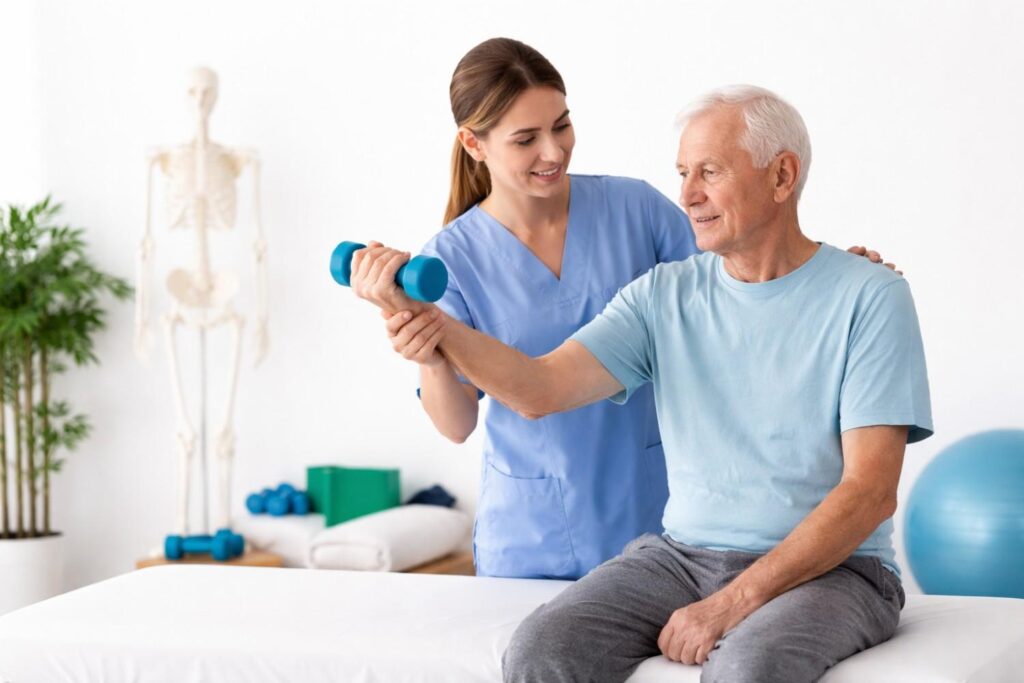 Post-stroke physiotherapy isn’t one-size-fits-all. A good physio assesses the patient’s specific deficits and builds a personalised plan. Here’s what they’re working on:
1. Restoring Motor Function and Muscle Strength
Weakness on one side of the body (hemiparesis) is one of the most common post-stroke impairments. Physiotherapists use carefully structured exercises to activate weakened muscles, rebuild neuromuscular control, and gradually restore functional movement. It starts small, maybe just lifting a finger, and builds from there.
2. Retraining Balance and Coordination
Many stroke survivors struggle to stand, walk, or even sit without assistance. Balance retraining involves exercises that challenge the body’s stability systems in a safe, supported environment. Over time, the nervous system relearns how to keep the body upright.
3. Gait Rehabilitation
Getting someone walking again is often the top goal in stroke rehab. Physiotherapists use treadmill training, parallel bars, assistive devices, and body-weight support systems to help patients relearn walking patterns. Techniques like constraint-induced movement therapy, where the unaffected limb is temporarily restricted, push the weaker side to do more.
4. Managing Spasticity
Spasticity is muscle stiffness that sets in when the brain can no longer properly regulate muscle tone. Without treatment, it can become painful and limit movement even further. Physiotherapy uses stretching protocols, positioning techniques, and sometimes hydrotherapy to keep muscles pliable and reduce discomfort
5. Breathing and Posture
Trunk weakness after a stroke can seriously affect posture and breathing. Physios work on core strengthening and respiratory exercises, especially for patients who’ve also had complications like pneumonia during the acute phase.
Clinical Note
According to the World Stroke Organization, early mobilisation within 24–48 hours of a stable stroke significantly reduces complications like deep vein thrombosis and pressure sores and improves long-term functional outcomes.
When Should Physiotherapy Begin After a Stroke?
This is a question almost every family asks and the answer has shifted considerably over the years. The old assumption was to wait until the patient was fully “medically stable.” Today, evidence strongly supports early mobilisation.
Most hospitals now begin bedside physiotherapy within 24 to 72 hours of admission, assuming there are no medical contraindications. This early phase focuses on:
- Safe positioning to prevent joint contractures and pressure sores
- Passive range-of-motion exercises for paralysed limbs
- Sitting upright and early standing practice
- Breathing exercises and swallowing assessments (if needed)
After discharge, rehabilitation typically continues in an outpatient clinic or at home. Consistency here matters enormously, even brief daily sessions outperform intensive fortnightly visits.
Physiotherapy Techniques That Make a Real Difference
Bobath (Neurological Developmental Treatment)
One of the most widely used approaches in stroke rehab, Bobath therapy focuses on inhibiting abnormal movement patterns and facilitating more normal, functional movement. The physio guides the patient through movements, gently correcting compensatory habits that can develop on the stronger side.
Task-Specific Training
Research consistently shows that practicing a specific task, like picking up a cup or climbing stairs, is more effective than generic exercises. It’s not just about muscle strength; it’s about rebuilding the complete motor programme in the brain. A patient who wants to cook again might practice reaching, grasping, and stirring as part of their therapy.
Hydrotherapy
Working in a pool reduces the effect of gravity, allowing patients with severe weakness to move limbs they couldn’t otherwise. Warm water also helps with spasticity and is psychologically easier for many patients to begin movement.
Electrical Stimulation (FES/NMES)
Functional Electrical Stimulation uses mild electrical impulses to trigger muscle contractions in paralysed or weakened muscles. When combined with voluntary effort from the patient, it reinforces the brain’s attempt to re-establish motor pathways, essentially giving the brain a “shortcut” for relearning movement.
What Recovery Actually Looks Like
Consider a 58-year-old woman, let’s call her Meena, who experienced a left-hemisphere ischemic stroke. She woke up with her right arm and leg nearly immobile and had difficulty forming words.
By day three, her physio had her sitting at the edge of the bed. By week two, she was standing with support. At six weeks, she was taking supervised steps in a corridor. By month four, she was walking slowly but independently, using a cane, and had recovered enough arm function to feed herself.
Her progress wasn’t linear. There were days she cried. Days nothing seemed to change. But the physiotherapy kept providing her brain with the repetitive, structured input it needed to rebuild. That’s how recovery works, not dramatically, but steadily.
Caregiver Tip
The most powerful thing a family member can do is reinforce therapy at home. Short, frequent movement practice, even 10 minutes, three times a day, adds up significantly over weeks and months. Ask the physiotherapist for a simple home exercise programme and stick to it.
Challenges That Can Slow Recovery
Being realistic matters here. Some factors make stroke recovery harder:
Severity of the stroke: Larger infarcts with more brain damage take longer and may plateau sooner.
Age and pre-existing conditions: Older patients or those with diabetes, heart disease, or previous strokes face a steeper road.
Post-stroke depression: Extremely common and often underdiagnosed, depression can crush motivation. It needs to be treated alongside physical rehab, not ignored.
Gaps in access to physiotherapy: In many parts of the world, consistent, skilled rehab is hard to get. Telerehabilitation is emerging as a valuable bridge.
Frequently Asked Questions
How long does physiotherapy last after a stroke?
There’s no fixed timeline, it depends on the stroke’s severity and the patient’s goals. Many patients benefit from active physiotherapy for 6 to 12 months. Some continue with maintenance therapy for years. The most intensive gains typically happen in the first three to six months.
Can physiotherapy help with arm weakness after a stroke?
Yes, absolutely. Upper limb recovery is challenging but very possible, particularly with techniques like constraint-induced movement therapy, mirror therapy, and robot-assisted training. Early and consistent practice is key, the arm is often neglected because the legs are prioritised for walking.
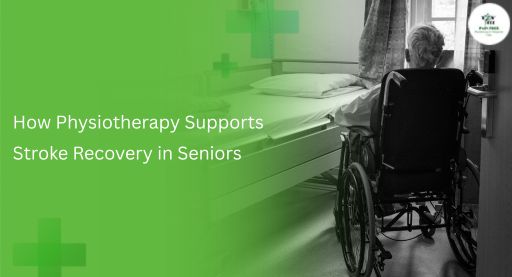
Is physiotherapy effective for elderly stroke patients?
Age alone shouldn’t limit rehabilitation. While older adults may progress more slowly, they absolutely benefit from physiotherapy. The goals may be adjusted, say, prioritising safe transfers rather than running, but meaningful improvement in function and quality of life is achievable at any age.
What’s the difference between physiotherapy and occupational therapy after a stroke?
Physiotherapy focuses on movement, strength, balance, and mobility, helping patients walk, stand, and control their bodies. Occupational therapy focuses on daily living activities like dressing, cooking, and writing. Both work together in stroke rehab, and patients usually benefit from both simultaneously.
Can a stroke patient do physiotherapy at home?
Yes, and it’s encouraged. Home exercise programmes prescribed by a physiotherapist are a vital part of recovery. With the rise of telerehabilitation, many patients now receive remote physiotherapy sessions via video calls, which has helped close access gaps considerably.