

Do your calves feel stiff while walking, climbing stairs, or after sitting for long periods? Tight calf muscles are more common than people think and may affect ankle movement, balance, posture, and even daily comfort. A proper calf stretch can help improve flexibility, reduce lower leg tightness, and support smoother movement.
The calf muscles work every time you stand, walk, run, or shift body weight. When they become tight, simple activities may start feeling uncomfortable. At Pain Free Physiotherapy Clinic, we recommend safe and guided calf stretching exercises based on muscle tightness, movement limitations, and physical activity levels.
Why Tight Calves Affect Walking and Mobility
The calf muscles connect the knee, ankle, and foot movement together. If flexibility in this area decreases, your movement pattern may also change.
Tight calves may sometimes contribute to:
- Difficulty walking comfortably
- Limited ankle flexibility
- Stiffness after sitting
- Reduced balance during movement
- Extra pressure on feet and knees
For many people, regular calf muscle stretching improves flexibility and helps movement feel more natural.
When Do You Actually Need a Calf Stretch?
People often ignore tight calves until discomfort becomes noticeable.
You may benefit from calf stretch exercises if:
Your Legs Feel Tight in the Morning
Morning stiffness in the lower leg may indicate reduced muscle flexibility.
Running or Walking Feels Uncomfortable
Runners and active individuals often experience tight calf muscles after repeated impact activities.
Standing for Long Hours Feels Heavy
Jobs that require standing for long periods may create tension in the calf region.
You Notice Reduced Ankle Movement
Limited ankle flexibility often points toward calf tightness.
How to Stretch Calf Muscles the Right Way
Many people search for “how to stretch calf muscles properly” because poor stretching habits may worsen tightness.
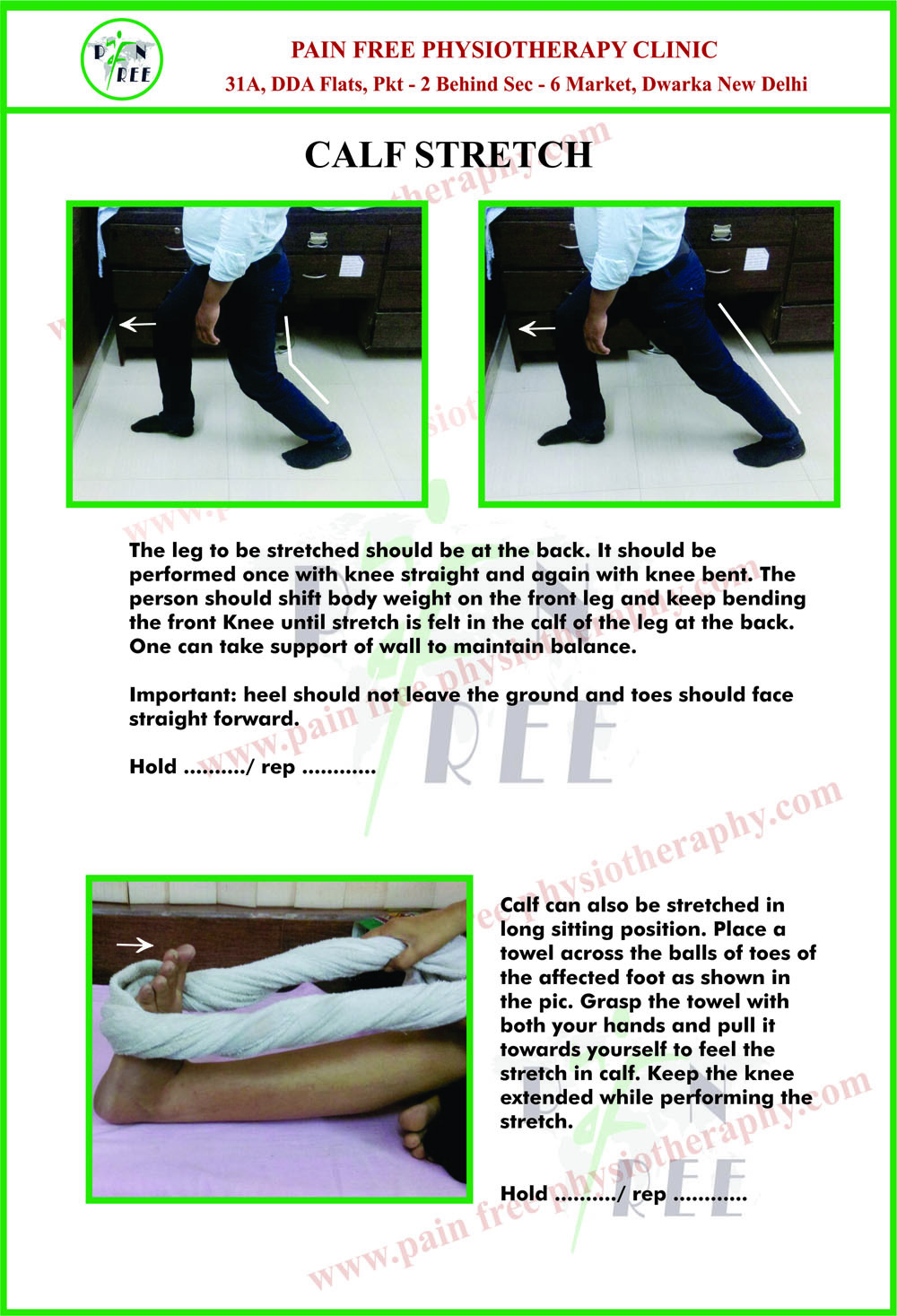
Wall Lean Stretch
Stand facing a wall and place one foot behind you while keeping the heel flat. Lean slightly forward to feel a gentle stretch.
Heel Drop Stretch
Standing on a stair edge and lowering the heel slowly may improve lower leg flexibility.
Towel Assisted Stretch
Using a towel around the foot while seated helps stretch tight calf muscles gently.
The goal is controlled movement, not forceful stretching.
Calf Stretch for Runners, Heel Pain, and Desk Workers
Different lifestyles affect calf muscles differently.
For runners: Stretching may support muscle recovery after repeated impact.
For desk workers: Sitting too long can make calf muscles feel tight and stiff.
For heel discomfort: Reduced calf flexibility may sometimes affect the heel and foot movement pattern.
A physiotherapist can recommend the right exercise for lower leg stretching, depending on your condition.
Mistakes That Keep Your Calf Muscles Tight
Avoid these common mistakes:
- Skipping warm ups
- Stretching too aggressively
- Wearing poor footwear
- Ignoring recovery after exercise
- Holding painful stretch positions
Consistency matters more than intensity.
FAQs
What is the best calf stretch?
The wall calf stretch is commonly recommended because it gently improves calf flexibility and ankle mobility.
How do you release tight calf muscles?
Tight calf muscles may improve with gentle stretching, walking, mobility work, hydration, and guided physiotherapy exercises.
Should I stretch my calves every day?
Gentle calf stretching may be done regularly depending on stiffness, activity level, and overall mobility.
Why are my calf muscles always tight?
Tight calves may happen due to prolonged sitting, overuse, poor footwear, reduced ankle flexibility, or muscle imbalance.
Can tight calves cause knee or foot pain?
Yes, tight calf muscles may sometimes affect walking mechanics and place extra strain on the knees, heels, or feet.