





Ever noticed your neck feeling unusually tight after working on a laptop or spending too much time on your phone? That stiffness around the side of the neck is not always random. In many cases, tight scalene muscles may be quietly contributing to discomfort, restricted movement, or tension that spreads toward the shoulders.
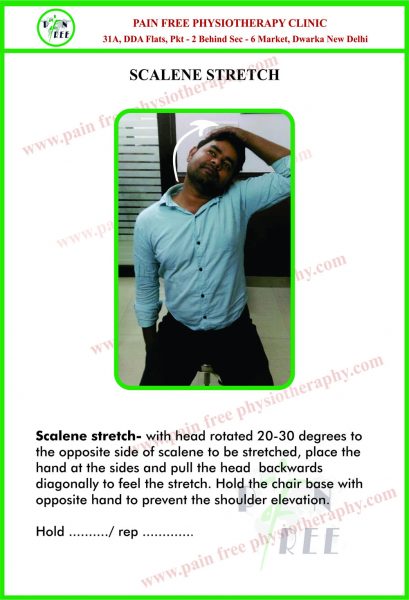
A scalene stretch is a gentle exercise designed to target the muscles running along the sides of the neck. These muscles play an important role in supporting neck movement, posture, and even breathing mechanics. When they become tight, simple movements like turning your head while driving or looking over your shoulder may feel uncomfortable.
Why Neck Tightness Happens More Often Than You Think
Neck muscles work continuously throughout the day, especially when posture is not ideal. Long periods of screen time, poor workstation setup, stress, or even sleeping awkwardly may slowly increase muscle tension.
The scalene muscles often become tight because of:
- Looking downward for long periods
- Slouching while working
- Long office hours with minimal movement
- Muscle strain after exercise
- Stress-related tension in the upper body
This is one reason many people searching for physiotherapy in Delhi seek help for recurring neck stiffness linked to daily lifestyle habits rather than a major injury.
A Common Sign Your Scalene Muscles May Be Tight
Tight scalenes do not always cause obvious pain. Sometimes, the signs are subtle and easy to overlook.
You may notice:
- Difficulty turning your neck comfortably
- A pulling sensation on the side of the neck
- Tightness after waking up
- Stiffness that increases by evening
If these symptoms sound familiar, adding a stretch for neck stiffness to your daily routine may help improve comfort and flexibility.
How to Perform a Scalene Stretch Without Overstretching
Unlike aggressive stretching, neck mobility exercises work best when done gently.
Start by sitting comfortably with your shoulders relaxed. Slowly tilt your head toward one shoulder without raising the shoulder itself. From there, slightly angle your chin upward until you feel a gentle stretch running down the side of the neck.
Hold the stretch for around 20 to 30 seconds before switching sides.
The goal is not to stretch harder. The goal is to stretch smarter. A mild pull is normal, but pain or tingling is not.
Many people undergoing physiotherapy in Dwarka for posture-related neck discomfort are often encouraged to combine stretching with posture correction and strengthening exercises for better long-term results.
What Makes Scalene Tightness Worse?
Certain habits can unintentionally keep neck muscles irritated, even when stretching is done regularly.
Things that may worsen tightness include:
- Working without posture support
- Sleeping with an unsupportive pillow
- Ignoring repeated neck stiffness
- Holding stress in the shoulders and neck
- Sitting continuously without breaks
A simple scalene muscle stretch may help, but consistent movement habits matter just as much.
When Stretching Alone May Not Be Enough
If neck tightness keeps returning, begins causing headaches, or limits daily movement, it may signal an underlying issue beyond muscle stiffness.
In some cases, movement restrictions, posture imbalance, or muscle weakness may need proper evaluation. People exploring options for physiotherapy in Delhi often seek professional guidance when home stretches stop providing lasting relief.
For posture-related stiffness, mobility concerns, or recurring muscle tightness, Pain Free Physiotherapy and Chiropractic Clinic focuses on movement-based assessment to better understand what may be contributing to discomfort.
Frequently Asked Questions
How do you stretch the scalene muscles?
To stretch the scalene muscles, gently tilt your head to one side and slightly lift your chin upward until you feel a mild stretch on the side of the neck. Hold for 20 to 30 seconds and repeat on both sides.
What causes tight scalene muscles?
Tight scalene muscles are often caused by poor posture, prolonged sitting, stress, excessive phone or laptop use, and repetitive neck strain.
Can tight scalene muscles cause neck pain?
Yes, tight scalene muscles may contribute to neck stiffness, side neck discomfort, shoulder tension, and restricted movement.
How often should I do a scalene stretch?
A scalene stretch may be performed daily or several times a week depending on muscle tightness and activity level.
Why is the side of my neck tight?
The side of the neck may feel tight due to posture strain, muscle overuse, stress, poor sleeping position, or prolonged sitting.