




7 Exercises for Lower Back Pain You Can Do at Home
Lower back pain has quietly become one of the most common health complaints today. Long sitting hours, poor posture, stress, lack of movement, and weak core muscles all contribute to discomfort that can affect daily life. The good news is that the right exercises can significantly reduce lower back pain, improve mobility, and prevent future flare-ups.
In this guide, you’ll learn 7 exercises for lower back pain that are safe, effective, and easy to do at home. These exercises are commonly recommended in physiotherapy because they target the muscles that support your spine, improve flexibility, and reduce stiffness, without needing expensive equipment.
Why Lower Back Pain Is So Common Today
Modern lifestyles are not kind to our backs. Sitting for long hours, slouching over phones, weak core muscles, and sudden physical strain all overload the lower spine. When muscles become tight or weak, they fail to support the spine properly, leading to pain and restricted movement.
Regular, well-guided exercises help:
- Reduce muscle tension
- Improve spinal stability
- Increase blood flow
- Prevent recurrence of pain
Who Can Safely Do These Exercises?
These lower back pain exercises are suitable for:
- Office workers
- Home-makers
- Seniors (with modifications)
- People with mild to moderate back pain
- Those recovering from stiffness or muscle tightness
Who Should Avoid or Modify?
If you have severe pain, numbness, recent surgery, spinal fractures, or pain radiating into the legs, consult a physiotherapist at a pain free physiotherapy & chiropractic clinic before starting.
7 Exercises for Lower Back Pain (Step-by-Step Guide)
1. Pelvic Tilt
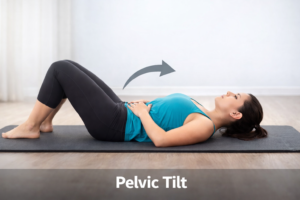
What it helps: Activates deep core muscles and reduces stiffness.
Steps:
- Lie on your back with knees bent
- Gently flatten your lower back into the floor
- Tighten your stomach muscles
- Hold for 5 seconds, then relax
Reps: 10–15
Breathing: Exhale while tightening
Common mistake: Overarching the back
2. Knee-to-Chest Stretch
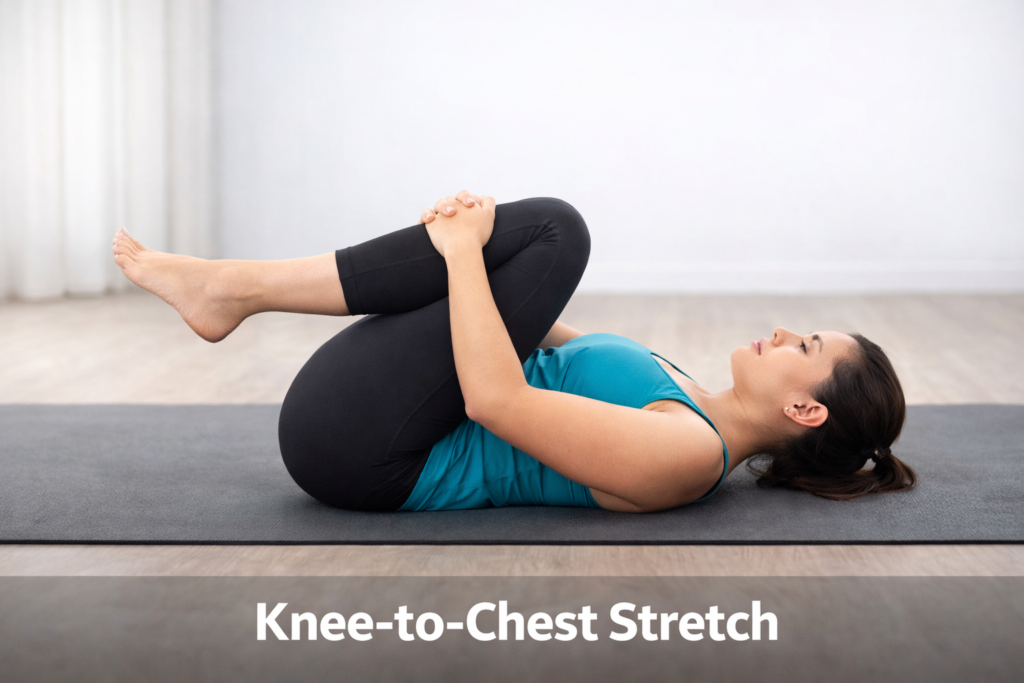
What it helps: Relieves tight lower back and hip muscles.
Steps:
- Lie on your back
- Bring one knee toward your chest
- Hold with both hands
- Switch legs
Reps: 10 each side
Modification: Use a towel behind the thigh if flexibility is limited
3. Cat-Cow Stretch
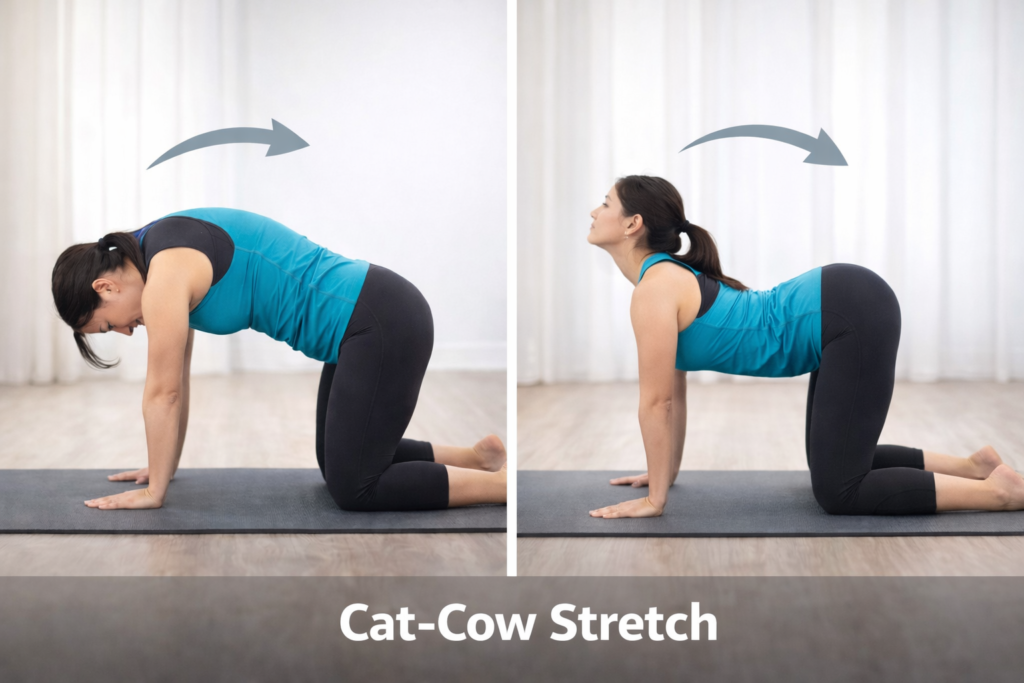
What it helps: Improves spinal mobility and reduces stiffness.
Steps:
- Get on hands and knees
- Inhale, arch your back (cow)
- Exhale, round your back (cat)
Reps: 10–12 slow movements
Tip: Move with breath, not speed
4. Glute Bridge
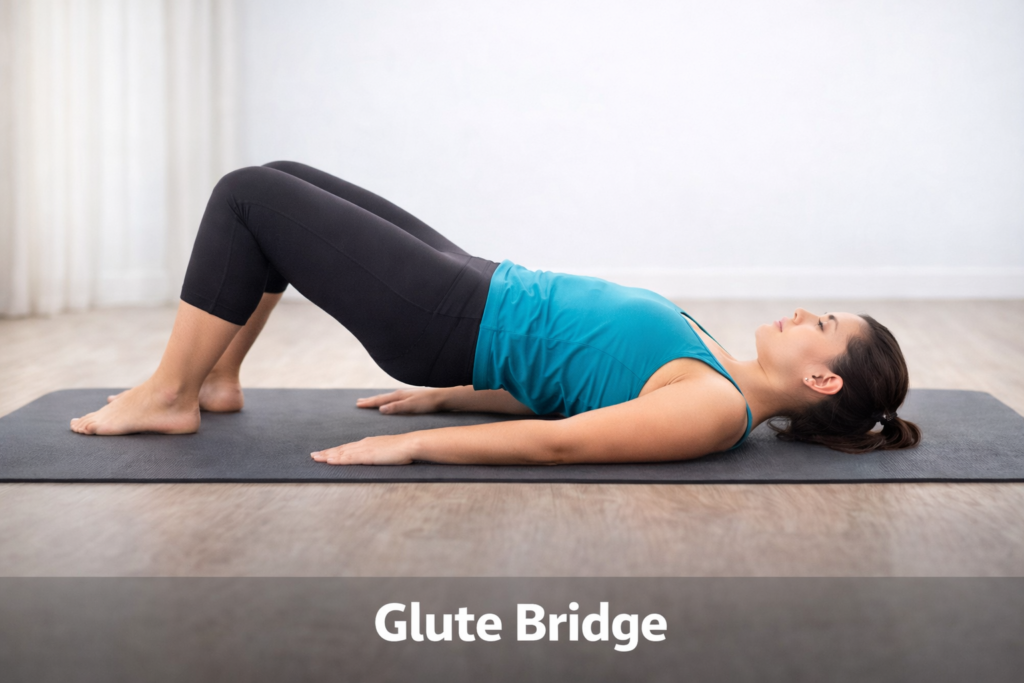
What it helps: Strengthens glutes and supports the lower spine.
Steps:
- Lie on your back, knees bent
- Push through heels
- Lift hips until body is straight
- Hold for 5 seconds
Reps: 10–15
Progression: Add a resistance band around knees
5. Child’s Pose
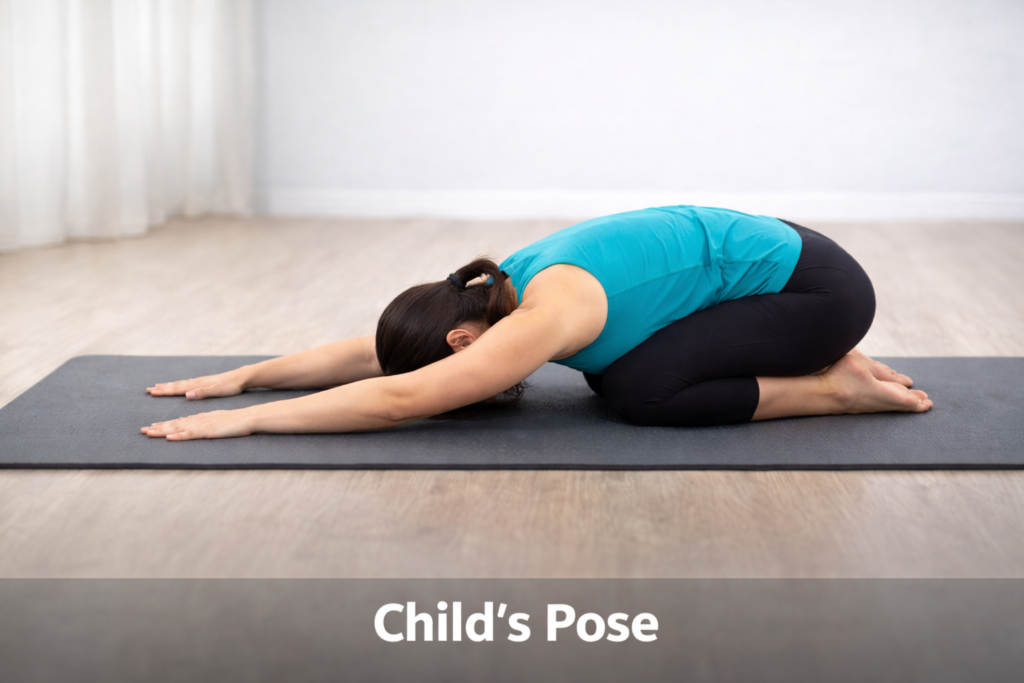
What it helps: Releases tension and relaxes the spine.
Steps:
- Sit back on heels
- Stretch arms forward
- Lower chest toward the floor
Hold: 20–30 seconds
Best for: End of the routine or flare-ups
6. Seated Spinal Twist
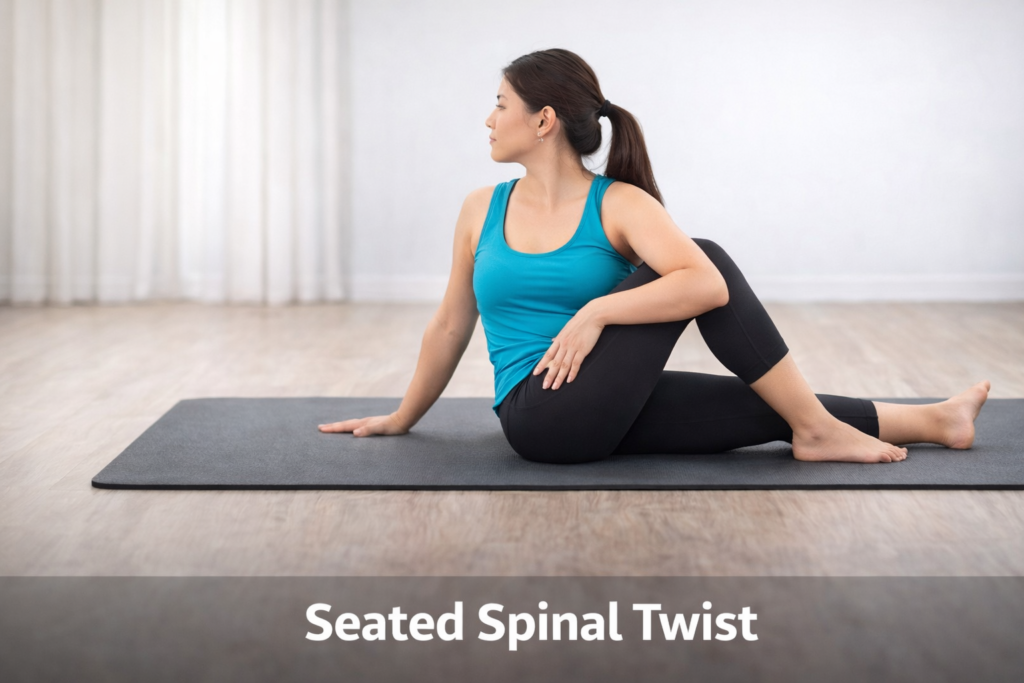
What it helps: Improves flexibility and reduces stiffness from sitting.
Steps:
- Sit upright on a chair
- Twist gently to one side
- Hold, then switch
Reps: 8–10 each side
Tip: Keep movements slow and controlled
7. Bird Dog
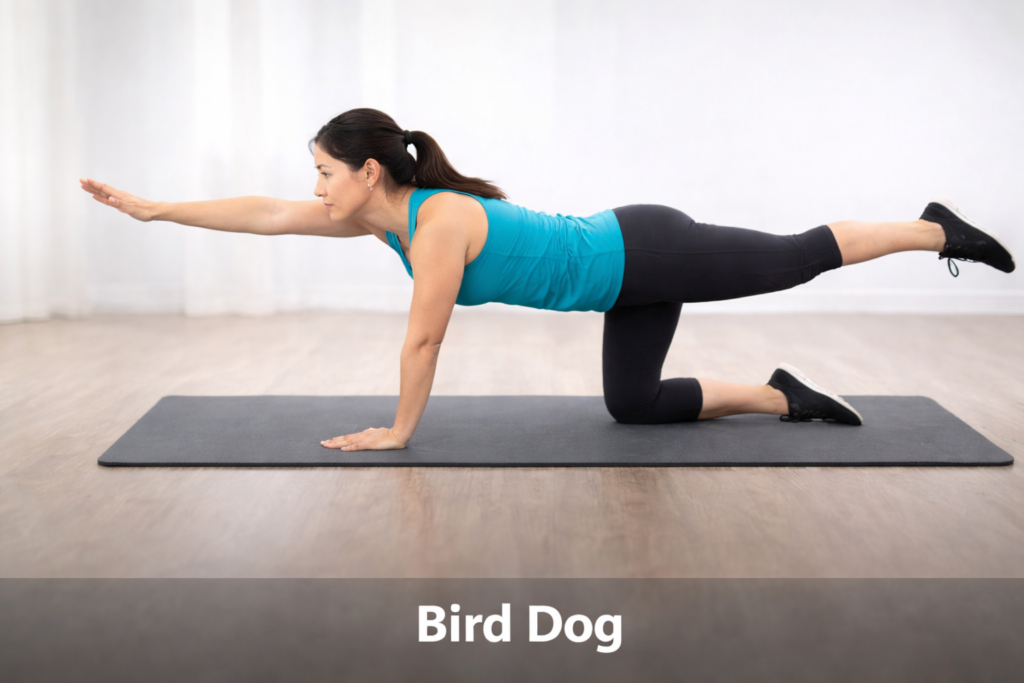
What it helps: Builds core stability and balance.
Steps:
- Start on hands and knees
- Extend opposite arm and leg
- Keep spine neutral
- Hold for 5 seconds
Reps: 10 each side
Common mistake: Letting hips drop or twist
How Often Should You Do These Exercises?
For best results:
- Daily for stiffness relief
- 3–5 times per week for strengthening
- Combine with walking and posture correction
Consistency matters more than intensity.
Equipment You Can Add (Optional)
- Resistance band for strengthening
- Pillow or rolled towel for support
- Yoga mat for comfort
- Foam roller for muscle release
These additions make home exercises more effective.
When Should You See a Physiotherapist?
If pain:
- Lasts more than 2 weeks
- Keeps returning
- Radiates to legs
- Limits daily activity
The best physiotherapist in Dwarka, Delhi, can personalise exercises and correct movement patterns.
FAQs – People Also Ask
Q. Are exercises good for lower back pain?
A. Yes, targeted exercises reduce pain, improve strength, and prevent recurrence.
Q. Which exercise is best for lower back pain?
A. Pelvic tilts and glute bridges are among the most effective when done regularly.
Q. Can lower back pain be cured without surgery?
A. Most cases improve with physiotherapy, exercise, and posture correction.
Q. How many days should I exercise for back pain?
A. Ideally 3–5 days a week, depending on pain severity.
Q. Is walking good for lower back pain?
A. Yes, walking improves circulation and supports recovery when done correctly.
Final Thoughts
Lower back pain doesn’t mean you have to stop living actively. With the right approach, these 7 exercises for lower back pain can reduce discomfort, improve mobility, and protect your spine long-term. What matters most is doing them correctly, consistently, and safely.