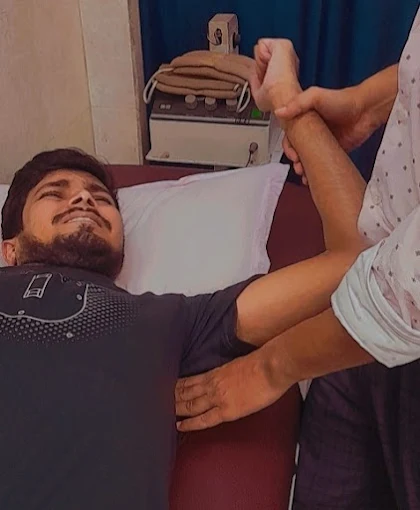






Muscle Weakness: Causes, Warning Signs and When to Get Help
You push down on the armrests to get up from the sofa. A year ago, you would not have thought twice about standing up. Now your legs need a little help, and you tell yourself it is just age, tiredness or a long week.
Sometimes that is true. But muscle weakness that keeps returning, slowly gets worse or begins to limit daily life deserves a proper explanation, not a guess. The cause may be as simple as too much sitting, or as important as a nerve problem, a nutrient deficiency or a medical condition. The first step is always to understand what is going on.
This guide is about weakness, meaning a loss of strength. It explains the common causes, the symptoms to watch for, the red flags that need urgent attention and what an assessment usually involves. Pain-led problems and stroke recovery are different topics, and we point you to those guides where they apply.
What causes muscle weakness?
Muscle weakness can be caused by physical inactivity, low vitamin D or B12, muscle or nerve disorders, infections, thyroid or diabetes-related problems and some medicines. It can affect the arms, the legs or the whole body. Weakness that is persistent or getting worse should be assessed by a doctor, and sudden weakness, especially on one side of the body, is an emergency.
What is muscle weakness?
Muscle weakness means a muscle cannot produce the force you expect from it. You are not just tired: the movement itself is harder, slower or impossible.
People describe it in very ordinary ways. Stopping halfway up a staircase. Struggling to twist open a jar. Finding that a full water bottle feels heavy. Needing both hands to get out of a chair.
Muscle weakness, fatigue, and pain: how to tell the difference
These three feel similar and often overlap, but they are not the same thing.
- True muscle weakness: The muscle cannot generate normal force, even when you are rested.
- Muscle fatigue: The muscle tires with repeated effort and recovers with rest.
- General fatigue: You feel low on energy overall, mentally and physically, even if your muscle strength is normal.
- Muscle pain: The muscle hurts, which can make you avoid using it, but its strength may be normal. If aching, soreness or tightness is your main problem, read our guide to the root cause of muscle pain.
A simple clue: if you can do a task but get tired quickly, fatigue is more likely. If you cannot do it at all, or one side is clearly weaker than the other, mention it to a doctor sooner rather than later.
Common causes of muscle weakness
There is no single cause. What is behind your weakness depends on your age, activity level, health conditions, medicines and the pattern of symptoms.
1. Inactivity
Muscles follow a simple rule: use them or lose them. Long hours at a desk, weeks of bed rest after surgery or illness, or a lifestyle with very little walking can all reduce strength surprisingly fast. Prolonged sitting mainly under-uses the hips and thighs, which is why standing up and stairs often feel harder first. Standing or walking for a few minutes every hour, plus regular strengthening, helps protect them.
A pattern physiotherapists see often is a person who blames “age” for weakness that is largely due to deconditioning. The two are easy to confuse, and deconditioning is usually reversible. Prolonged disuse can also lead to muscle atrophy, which is a loss of muscle size. If age-related weakness is your concern, our page on physiotherapy for older adults explains how strength is rebuilt safely later in life.
2. Vitamin deficiency and muscle weakness
Muscles and nerves both depend on good nutrition.
- Vitamin D: Severe deficiency can cause muscle weakness, aches and bone problems. Low levels are widely reported in India, including among people who spend most of the day indoors.
- Vitamin B12: B12 supports nerve function and red blood cell production. Low levels can cause numbness, tingling, balance problems and weakness. Vegetarians and people with certain digestive conditions can be at higher risk.
- Other factors: Low protein intake and imbalances in minerals such as potassium, calcium or magnesium can also play a part.
A word of caution: weakness does not automatically mean you are deficient, and taking supplements without testing can delay the real diagnosis. A blood test is the sensible first step.
3. Diseases that cause muscle weakness
Several conditions can reduce muscle strength, either by affecting the muscle itself or the nerves that control it.
- Nerve conditions: peripheral neuropathy, nerve compression or injury, and neurological conditions such as multiple sclerosis or the after-effects of stroke.
- Muscle conditions: myositis (muscle inflammation) and muscular dystrophies.
- Metabolic and hormonal conditions: thyroid disorders and diabetes-related nerve damage.
- Infections and illness: weakness can follow viral illnesses, or appear during a serious infection.
This list is for awareness, not self-diagnosis. Each of these conditions has its own pattern, and only a medical assessment can tell them apart.
4. Medicines
Some medicines, including certain cholesterol-lowering drugs and long-term steroids, can cause muscle symptoms in some people. If weakness started after a new medicine or a dose change, tell your prescribing doctor. Please do not stop or adjust a prescribed medicine on your own.
Muscle weakness symptoms: signs you may be missing
Weakness rarely announces itself dramatically. It usually shows up as small changes in daily routine:
- Difficulty climbing stairs or rising from a chair or toilet seat
- Trouble lifting, carrying or holding everyday objects
- Legs that feel heavy, wobbly or give way while walking
- A weaker grip, such as dropping cups or struggling with keys
- Tripping more often, or a foot that seems to drag
- Poor balance or clumsiness
- Weakness that has lasted for weeks or is slowly increasing
Two details help a clinician a great deal: when it started and which side or area is affected. Make a note of both before your appointment.
Muscle weakness in the arms and legs: what the pattern can tell you
Where you feel the weakness matters, because it points the assessment in different directions.
Arms. Arm weakness often shows up when you reach overhead, carry shopping bags, comb your hair, fasten buttons or grip objects. Weakness in one arm may suggest a problem with a specific nerve or with the brain or spinal cord, while weakness in both arms can point towards a muscle, metabolic or wider nerve condition.
Legs. Leg weakness is felt most when you climb stairs, stand up from low seats, walk longer distances or step off a kerb. Weakness in both thighs, which makes rising from a chair difficult, is a classic reason for assessment. A single leg that suddenly feels weak or numb is a different matter and should be checked promptly.
This pattern-based approach is why a physical examination matters. The same complaint (“my legs are weak”) can have very different causes.
When to worry about muscle weakness
Not every weak day is a warning sign. But please arrange a medical evaluation if:
- Weakness lasts more than a couple of weeks without a clear reason
- It is gradually getting worse
- It makes daily tasks like walking, dressing or cooking harder
- It comes with numbness, tingling, pain or balance problems
- You notice weight loss, swelling, difficulty swallowing or breathlessness alongside it
- It started after a new medicine
Sudden muscle weakness: treat it as an emergency
Sudden weakness, especially on one side of the body, can be a sign of stroke. Use BE FAST to recognise it:
- Balance: sudden loss of balance or coordination
- Eyes: sudden vision loss or double vision
- Face: one side of the face drooping
- Arm: weakness or numbness in one arm
- Speech: slurred speech or difficulty understanding
- Time: call for emergency help immediately
If you notice any of these, call 112 or your local ambulance number straight away and go to the nearest hospital with stroke care. Do not wait to see whether it passes, and do not book a physiotherapy appointment first. Every minute counts.
Two other situations also need emergency care: sudden weakness in both legs, especially with back pain, numbness around the groin or loss of bladder or bowel control, and weakness that comes with trouble breathing. Once a stroke has been treated, recovery is a separate journey, covered in our guide to physiotherapy after a stroke.
How is the cause of muscle weakness found?
Finding the cause matters, because the right treatment depends on it. A typical assessment may include:
- A detailed history: when it began, how it has changed, medicines you take, diet, other symptoms and your family history.
- A physical examination: muscle strength, reflexes, sensation, coordination, balance and the way you walk.
- Blood tests, if needed: vitamin D, vitamin B12, blood sugar, thyroid function, kidney function and electrolytes.
- Further tests, if needed: nerve conduction studies, EMG or imaging when a nerve, muscle or spinal problem is suspected.
Not everyone needs every test.
Which doctor should you see first?
A general physician or family doctor is a sensible first stop for most people, as they can order basic blood tests and refer you onward. A neurologist is more appropriate if you have numbness, balance problems, one-sided weakness, or symptoms that are progressing. A physiotherapist can assess how the weakness affects your movement and work alongside your doctor, but cannot replace a medical diagnosis.
How can physiotherapy help once the cause is known?
Once a doctor has looked into the cause (and cleared you for exercise where needed), physiotherapy can help you get stronger and move with more confidence. The plan is built around the person, not a standard exercise sheet:
- Movement and strength assessment: checking which muscles are weak, how you walk and balance, and which daily tasks are hardest.
- Targeted strengthening and functional training: exercises that start at your level, then progress towards real-life movements such as standing up, climbing stairs and carrying objects.
- Balance work: to improve stability and reduce fall risk.
- Progress tracking: re-checking strength so the programme changes as you improve.
Where weakness is linked to a neurological condition, a specialised approach is needed. Our team provides specialised nerve and movement rehabilitation, and people with multiple sclerosis may need programmes built around fatigue, stiffness and balance, as explained in our guide to physiotherapy for multiple sclerosis.
The aim is not to push through weakness, but to rebuild strength safely.
What to bring to your first appointment
A little preparation makes the assessment far more useful:
- Recent blood test reports and any scans
- A list of all medicines and supplements, including doses
- A short note on when the weakness began and what makes it better or worse
- Details of past surgeries, falls or illnesses
- Comfortable clothing you can move in
Frequently asked questions
Can muscle weakness happen without muscle pain?
Yes. Many causes of weakness, including nerve problems and some muscle disorders, are painless. The absence of pain does not mean the weakness is harmless, so persistent weakness should still be checked.
How long should I wait before seeing a doctor about muscle weakness?
If there is no clear reason, such as a very hard workout or a recent illness, see a doctor when weakness lasts more than a couple of weeks or keeps getting worse. If it is sudden, one-sided, or comes with the emergency signs above, do not wait.
Does low vitamin D or B12 always cause weakness?
No. Severe vitamin D deficiency can cause muscle weakness and aches, and low B12 can cause numbness, tingling and balance problems, but many people with low levels have no weakness at all. A blood test confirms whether you are deficient, and your doctor can advise on correct treatment and dose.
Can muscle weakness be reversed?
Often, yes, when the cause is treatable. Weakness from inactivity or deconditioning usually improves with graded strengthening, and weakness from a deficiency or medicine can improve once that is addressed. Whether weakness from a nerve or muscle condition improves depends on the condition, which is why a diagnosis comes first.
Why is muscle weakness sometimes worse in the morning?
Poor sleep, stiffness after resting, medicine timing or an underlying condition can all play a role. Timing alone does not identify the cause, so if it happens regularly, discuss it with your doctor.
Should I exercise when my muscles feel weak?
Gentle walking is generally fine for most people, but if the weakness is sudden, one-sided or getting worse, see a doctor before starting any exercise programme. Once the cause is known, a physiotherapist can guide a safe level of exercise.
Do not explain it away
Muscle weakness has many possible causes, from long hours of sitting and low vitamin levels to nerve and muscle conditions. Most are manageable once identified, and the key is not to wait until everyday tasks become difficult. If the weakness is sudden, treat it as an emergency. If it is persistent, get it medically assessed, then consider physiotherapy to rebuild strength and confidence.
Is weakness affecting your walking, balance or daily tasks? Book an assessment at Pain Free Physiotherapy & Chiropractic Clinic in Dwarka, or call 8800299652. We will check your strength and movement and explain what a suitable rehabilitation plan could look like.