





[vc_row row_content_width=”grid” css=”.vc_custom_1553069876758{padding-bottom: 30px !important;}”][vc_column][vc_column_text css=”.vc_custom_1588399757225{padding-bottom: 25px !important;}”]
Posterior Shoulder Stretch
[/vc_column_text][/vc_column][vc_column offset=”vc_col-lg-offset-0 vc_col-lg-6 vc_col-md-offset-0 vc_col-md-12 vc_col-sm-offset-0″ el_class=”pdf”]
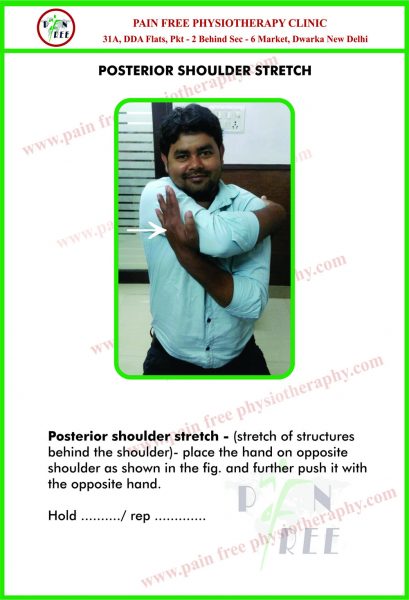
This stretch targets the muscles at the back of the shoulder, including the posterior deltoid and parts of the rotator cuff. When done correctly and consistently, it helps reduce tightness, improve flexibility, and support overall shoulder health.
At pain free physiotherapy and chiropractic clinic, specialists often recommend this stretch as part of shoulder rehabilitation programs to help patients recover from pain, injury, or stiffness.[/vc_column_text][/vc_column][/vc_row][vc_row][vc_column][vc_column_text]
What Is Posterior Shoulder Stretch?
[/vc_column_text][/vc_column][/vc_row][vc_row][vc_column][vc_column_text]The posterior shoulder stretch is a physiotherapy exercise designed to stretch the muscles located at the back of the shoulder joint. These muscles often become tight due to poor posture, sports activities, or prolonged sitting.
This exercise is commonly used in physiotherapy in Delhi and around the world to improve shoulder range of motion and reduce discomfort caused by conditions such as shoulder impingement, rotator cuff tightness, or frozen shoulder.
The stretch mainly targets the posterior deltoid, infraspinatus, and teres minor muscles, which play a major role in stabilizing and moving the shoulder joint. Stretching these muscles helps restore natural movement and reduce stress on the shoulder.[/vc_column_text][/vc_column][/vc_row][vc_row][vc_column][vc_column_text]
Benefits of Posterior Shoulder Stretch
[/vc_column_text][/vc_column][/vc_row][vc_row][vc_column][vc_column_text]Adding this simple exercise to your routine can provide multiple benefits for shoulder health.
1. Improves Shoulder Mobility
Tight posterior shoulder muscles can restrict movement. This stretch helps increase flexibility and improves the range of motion.
2. Reduces Shoulder Pain
Many people experience shoulder pain due to muscle tightness or poor posture. Stretching the posterior shoulder muscles can help relieve tension and discomfort.
3. Supports Rotator Cuff Health
The rotator cuff muscles stabilize the shoulder joint. This stretch helps keep these muscles flexible and functional.
4. Prevents Shoulder Injuries
Regular stretching can help prevent injuries, especially for athletes or people who perform repetitive arm movements.
5. Helps Correct Poor Posture
People who sit for long hours often develop tight shoulder muscles. This exercise helps restore proper shoulder alignment.
At Pain Free Physiotherapy and Chiropractic Clinic, physiotherapists often recommend this stretch as part of shoulder rehabilitation programmes.[/vc_column_text][/vc_column][/vc_row][vc_row][vc_column][vc_column_text]
How to Perform Posterior Shoulder Stretch
Follow these simple steps to perform the exercise safely.
- Stand or sit with your back straight and shoulders relaxed.
- Bring one arm across your chest at shoulder height.
- Use your opposite hand to gently pull the arm closer to your chest.
- You should feel a stretch at the back of your shoulder.
- Hold the stretch for 15 to 30 seconds.
Repeat the exercise 3 to 5 times on each side.
The goal is to feel a comfortable stretch without pain. If you experience sharp pain, stop the exercise and consult a physiotherapist.
This movement is also known as a cross-body shoulder stretch, which helps improve flexibility and reduce tightness in the posterior shoulder muscles.
[/vc_column_text][vc_column_text]
When Should You Do This Exercise?
The Posterior Shoulder Stretch is commonly recommended for:
- Shoulder stiffness
- Rotator cuff tightness
- Frozen shoulder recovery
- Poor posture caused by desk work
- Sports-related shoulder strain
Patients looking for physiotherapy in Dwarka often receive this exercise as part of their rehabilitation plan to restore shoulder mobility.
Regular practice can significantly improve shoulder flexibility and reduce discomfort in daily activities such as lifting objects, reaching overhead, or exercising.[/vc_column_text][/vc_column][/vc_row][vc_row][vc_column][vc_column_text]
Tips for Safe and Effective Stretching
To get the best results from this shoulder mobility exercise, keep the following tips in mind:
- Always warm up your shoulder before stretching
- Stretch slowly and avoid jerky movements
- Hold the stretch for at least 15 seconds
- Do not force the movement if pain occurs
- Practice consistently for better results
If shoulder pain persists, consulting a professional physiotherapist is recommended.
Experts at pain free physiotherapy and chiropractic clinic provide personalized treatment plans that include stretching, strengthening exercises, and manual therapy to restore shoulder function.[/vc_column_text][/vc_column][/vc_row][vc_row][vc_column][vc_column_text]
Frequently Asked Questions
1. What does a posterior shoulder stretch target?
The posterior shoulder stretch mainly targets the muscles at the back of the shoulder, including the posterior deltoid and rotator cuff muscles. These muscles help stabilize the shoulder and allow smooth arm movements.
2. How often should I do posterior shoulder stretch?
Most physiotherapists recommend performing this stretch once or twice daily, holding each stretch for 15–30 seconds and repeating it 3–5 times on each side.
3. Is posterior shoulder stretch good for shoulder pain?
Yes, it can help reduce shoulder pain caused by tight muscles, poor posture, or limited shoulder mobility. However, severe pain should always be evaluated by a physiotherapist.
4. Can posterior shoulder stretch help with frozen shoulder?
Yes, this stretch is often included in rehabilitation programs for frozen shoulder because it improves shoulder flexibility and gradually restores movement.
5. Should I stop the stretch if I feel pain?
Yes. The stretch should create mild tension but not sharp pain. If pain occurs, stop immediately and consult a physiotherapy professional.[/vc_column_text][/vc_column][/vc_row]