




How to know if it’s tennis elbow or golfer’s elbow?
You reach for your morning coffee cup and feel a sharp twinge on the outside of your elbow. Or maybe it’s a dull ache on the inside of your arm every time you grip your phone or shake someone’s hand. Naturally, your mind jumps to “tennis elbow”, but you’ve never picked up a racket in your life. Or you’ve heard of “golfer’s elbow” and assumed it only happens to golfers.
Here’s the truth: over 90% of people who develop these conditions have never played tennis or golf. Tennis elbow (lateral epicondylitis) and golfer’s elbow (medial epicondylitis) are two of the most common forms of elbow tendonitis, caused by everyday repetitive movements like typing, lifting, gardening, or even carrying grocery bags.
So how do you know which one you have? In this guide, we’ll break down the key differences in symptoms, location, causes, and a simple self-test you can do right now plus when it’s time to see a physiotherapist. By the end, you’ll have a clear picture of what’s going on with your elbow and what to do next.
What Are Tennis Elbow and Golfer’s Elbow?
On each side of your elbow joint, there’s a bony bump called an epicondyle, the outer one is the lateral epicondyle, and the inner one is the medial epicondyle. Tendons attach to these points and connect your forearm muscles to your elbow. Repetitive strain on these tendons causes tiny micro-tears, inflammation, and pain a condition known as epicondylitis.
- Tennis Elbow (Lateral Epicondylitis): Affects the tendons on the outer side of the elbow, which control wrist and finger extension.
- Golfer’s Elbow (Medial Epicondylitis): Affects the tendons on the inner side of the elbow, which control wrist flexion and gripping.
Tennis Elbow vs Golfer’s Elbow: Key Differences
The single biggest clue is where the pain is located.
| Factor | Tennis Elbow | Golfer’s Elbow |
|---|---|---|
| Pain location | Outer side of elbow | Inner side of elbow |
| Affected tendons | Wrist extensor muscles | Wrist flexor muscles |
| Worsened by | Gripping, lifting, wrist extension, handshakes | Wrist flexion, making a fist, lifting |
| Nickname | “Backhand elbow” | “Throwing elbow” |
| Common triggers | Typing, painting, using hand tools | Gardening, lifting, racket sport forehands |
If the pain is on the outside of your elbow and gets worse when you lift a cup or shake hands, that points to tennis elbow.
If the pain is on the inside of your elbow and worsens when gripping or bending your wrist inward, that points to golfer’s elbow.
Symptoms of Tennis Elbow
- Pain and tenderness on the outer elbow, sometimes radiating down the forearm
- Weak grip, struggling to hold a cup, open a jar, or shake hands
- Morning stiffness in the elbow and forearm
- Pain that worsens with wrist extension or gripping movements
Symptoms of Golfer’s Elbow
- Pain and stiffness on the inner elbow, sometimes radiating into the forearm
- Pain when flexing the wrist or making a fist
- Tenderness along the inner forearm
- Occasional tingling or numbness toward the ring and pinky fingers
- Reduced grip strength
How to Tell the Difference: A Simple Self-Test at Home
This quick check can help you identify which condition you might be dealing with (note: it’s not a substitute for a professional diagnosis).
Step 1 – Locate the Pain: Gently press on the bony points of your elbow. Pain on the outer point suggests tennis elbow; pain on the inner point suggests golfer’s elbow.
Step 2 – Wrist Extension Test (for Tennis Elbow): Hold your arm straight, palm facing down, and try to lift your wrist upward while your other hand applies gentle resistance. Pain on the outer elbow is a strong sign of tennis elbow.
Step 3 – Wrist Flexion Test (for Golfer’s Elbow): Hold your arm straight, palm facing up, and try to bend your wrist downward while your other hand resists. Pain on the inner elbow points to golfer’s elbow.
Step 4 – Grip Test: Squeeze an object firmly. Both conditions can cause grip weakness, but the location of pain remains the most reliable indicator.
What Causes Tennis Elbow and Golfer’s Elbow?
Despite their sporty names, these are classic repetitive strain injuries (RSI) that can affect anyone:
- Extended computer use or typing
- Repetitive tasks like gardening, painting, or using screwdrivers
- Carrying heavy bags or groceries
- Cooking, kneading dough, knitting
- Poor technique during weightlifting or exercise
- Holding a phone in the same position for long periods
Can You Have Tennis Elbow and Golfer’s Elbow at the Same Time?
Yes. If your daily activities strain both the flexor and extensor muscle groups of your forearm, both conditions can develop simultaneously. This is another reason a proper assessment from a physiotherapist is important, self-diagnosis can sometimes miss overlapping issues.
Treatment: How Physiotherapy Helps Tennis Elbow and Golfer’s Elbow
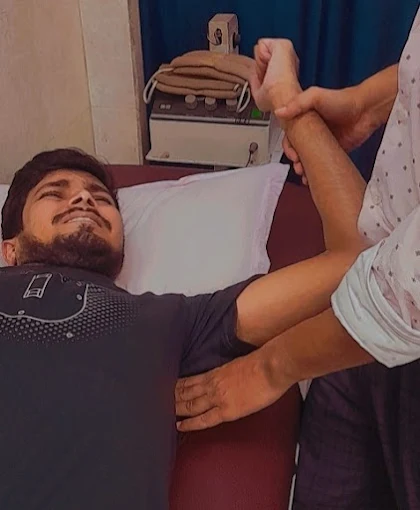
Physiotherapy is considered the primary and most effective treatment for both conditions. At Painfree Physiotherapy, our approach typically includes:
- Assessment and Diagnosis – A detailed history and physical tests to pinpoint the exact tendon involved and severity
- Pain Management – Ice/heat therapy, ultrasound, and electrical stimulation to reduce inflammation
- Manual Therapy – Soft tissue massage, joint mobilization, and myofascial release to relieve stiffness
- Stretching Exercises – Gentle stretches held for 15 seconds, repeated 2-3 times
- Strengthening Exercises – Eccentric exercises to build tendon resilience, starting light and progressing gradually
- Ergonomic Guidance – Adjustments to workstation setup and daily habits to prevent recurrence
- Bracing/Support – Elbow braces or straps when needed to offload the tendon
Most mild-to-moderate cases improve within 4 to 6 weeks of consistent physiotherapy, while more severe or chronic cases may require a structured rehab program over 6 to 12 weeks.
Home Care Tips for Initial Relief
- Rest: Temporarily avoid the activity that triggers the pain
- Ice Therapy: Apply ice for 15-20 minutes, 2-3 times a day
- Gentle Stretching: Perform pain-free wrist stretches daily
- Avoid Heavy Gripping: Limit lifting heavy objects until pain subsides
- Ergonomic Adjustments: Check your desk, keyboard height, and posture
When Should You See a Physiotherapist or Doctor?
If self-care doesn’t improve things within 1-2 weeks, or you notice any of the following, it’s time to seek professional help:
- Pain persists even at rest
- Numbness or tingling in your fingers
- Significant loss of grip strength
- Difficulty with daily activities like cooking, typing, or driving
- Pain lasting more than 2 weeks
Ignoring these symptoms without proper diagnosis can lead to chronic tendon damage or nerve-related complications over time.
Frequently Asked Questions
1. What is the difference between tennis elbow and golfer’s elbow?
Tennis elbow affects the tendons on the outer side of the elbow (wrist extensor muscles), while golfer’s elbow affects the tendons on the inner side (wrist flexor muscles). Pain location is the main differentiator.
2. Can I get golfer’s elbow without playing golf?
Yes. Golfer’s elbow can result from any repetitive gripping or wrist-flexing activity, such as lifting, typing, or gardening. Over 90% of cases aren’t sports-related at all.
3. How long does it take for tennis elbow to heal?
With proper physiotherapy and self-care, mild cases often show significant improvement within 4 to 6 weeks. Chronic or severe cases may take 3-6 months.
4. Does an elbow brace help with tennis elbow or golfer’s elbow?
Yes, an elbow brace or strap can help redistribute pressure away from the affected tendon and support healing, but it shouldn’t replace exercise and physiotherapy.
5. Can you have tennis elbow and golfer’s elbow at the same time?
Yes, if your daily activities place strain on both the flexor and extensor muscles of the forearm, both conditions can develop together.
6. What are the best exercises for tennis elbow?
Wrist extensor stretches, eccentric wrist extensions, and grip-strengthening exercises are among the most effective, ideally performed under physiotherapist guidance with gradual progression.
Conclusion
Tennis elbow and golfer’s elbow are common, treatable conditions, regardless of whether you’ve ever held a racket or club. The simplest way to tell them apart is by locating the pain: outer elbow points to tennis elbow, inner elbow points to golfer’s elbow.
If your pain persists despite home care, don’t wait it out. At Painfree Physiotherapy, our team will assess your condition thoroughly and create a personalized treatment plan to get you back to your daily activities and hobbies, pain-free.
Book your elbow pain assessment today and take the first step toward lasting relief.