





[vc_row row_content_width=”grid” css=”.vc_custom_1553069876758{padding-bottom: 30px !important;}”][vc_column][vc_column_text css=”.vc_custom_1588400166135{padding-bottom: 25px !important;}”]
Sub Occipital Stretch
[/vc_column_text][/vc_column][vc_column offset=”vc_col-lg-offset-0 vc_col-lg-6 vc_col-md-offset-0 vc_col-md-12 vc_col-sm-offset-0″ el_class=”pdf”]
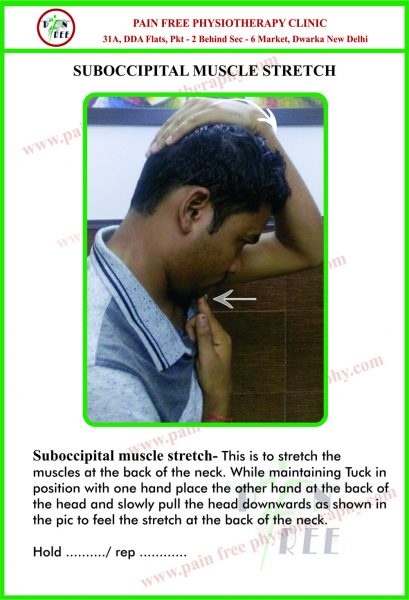
A sub occipital stretch is a gentle movement designed to release tension from the small muscles located where the neck meets the base of the skull. These muscles quietly support head movement and posture throughout the day. When they become tight, even simple activities like working on a laptop, reading, driving, or sleeping awkwardly may start to feel uncomfortable.[/vc_column_text][vc_column_text]
Why Do Sub Occipital Muscles Become Tight?
Modern lifestyle habits often place unexpected strain on the upper neck. Looking downward for long periods, poor sitting posture, stress, and excessive screen time may gradually tighten these muscles without you noticing.
Common reasons behind tightness include:
- Long hours of laptop or mobile use
- Forward head posture
- Poor sleeping position
- Stress-related muscle tension
- Sitting continuously without movement breaks
This is one reason many people searching for physiotherapy in Delhi often seek support for recurring neck stiffness and posture-related discomfort.[/vc_column_text][vc_column_text]
Signs You Might Need a Sub Occipital Stretch
Tight sub occipital muscles do not always feel like direct neck pain. Sometimes, the symptoms show up differently.
You may benefit from a sub occipital release stretch if you experience:
- Tightness at the base of the skull
- Tension headaches
- Neck stiffness after screen time
- Difficulty moving the neck comfortably
- Pain spreading toward the upper shoulders
Ignoring these signs for too long may gradually affect neck mobility and posture.[/vc_column_text][vc_column_text]
How to Do a Sub Occipital Stretch Correctly
Unlike forceful neck stretches, this movement works best when performed gently.
Sit comfortably or lie down in a relaxed position. Slowly tuck your chin inward as if creating a slight double chin. You should feel a mild stretch around the upper neck near the base of the skull. Hold the position for 15 to 30 seconds while breathing normally.
Repeat the movement gently without pulling or forcing the neck.
The purpose of a stretch for upper neck pain is to release muscle tension, not create discomfort. If pain increases, it is best to stop.
Many people receiving physiotherapy in Dwarka for posture related neck discomfort are often guided on gentle mobility exercises alongside stretching to improve long term movement.[/vc_column_text][vc_column_text]
Can Tight Sub Occipital Muscles Cause Headaches?
Yes, tightness in these muscles may sometimes contribute to tension related headaches. Since the sub occipital muscles sit close to the base of the skull, tension in this area may create discomfort that spreads upward toward the head or behind the eyes.
This is why many people search for neck stretches for headaches or stretches for neck tension relief when discomfort becomes frequent.[/vc_column_text][vc_column_text]
Daily Habits That May Make Neck Tightness Worse
Stretching helps, but some everyday habits may continue irritating the muscles.
These include:
- Slouching while working
- Looking down at screens for extended periods
- Sleeping without neck support
- Skipping movement breaks during work
- Holding stress in the shoulders and neck
Making small posture changes alongside a sub occipital muscle stretch may help support better long-term comfort.[/vc_column_text][vc_column_text]
When Should Neck Tightness Be Evaluated?
Occasional stiffness is common, but recurring discomfort should not be ignored. If headaches become frequent, neck movement feels restricted, or symptoms keep returning despite stretching, professional evaluation may help identify the root cause.
People exploring options for physiotherapy in Delhi often seek support for posture correction, muscle tightness, and mobility concerns linked to prolonged desk work.
For individuals struggling with recurring neck stiffness or posture-related discomfort, Pain Free Physiotherapy and Chiropractic Clinic focuses on movement assessment to better understand the cause of muscle tension.[/vc_column_text][vc_column_text]
Frequently Asked Questions
What is a sub occipital stretch?
A sub occipital stretch is a gentle neck movement designed to reduce tension in the small muscles located at the base of the skull and upper neck.
Can tight sub occipital muscles cause headaches?
Yes, tight sub occipital muscles may contribute to tension headaches, upper neck discomfort, and pain that spreads toward the head or behind the eyes.
How do you stretch sub occipital muscles?
A common method is gently tucking the chin inward while keeping the neck relaxed to create a mild stretch near the base of the skull.
How long should you hold a sub occipital stretch?
A sub occipital stretch is commonly held for 15 to 30 seconds and repeated several times depending on comfort and muscle tightness.
Why does the base of my skull feel tight?
Tightness at the base of the skull may happen due to poor posture, prolonged screen time, stress, muscle tension, or improper sleeping position.[/vc_column_text][/vc_column][/vc_row]