

Physical Therapy for Adult Scoliosis: 7 Safe Exercises to Ease Pain and Move Better
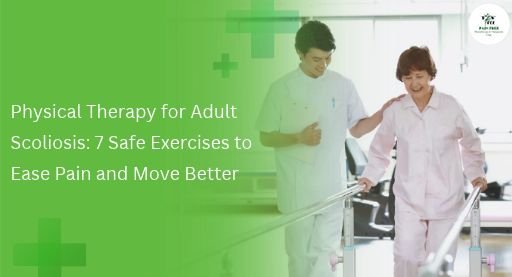
Physical therapy for adult scoliosis combines stretching, core and back strengthening, posture training, and breathing work to reduce pain, improve movement, and protect your spine. In adults, the goal is usually to keep you comfortable and active rather than to straighten the curve. A physical therapist tailors the plan to your curve, age, and symptoms.
You have seen the X-ray, heard the word “curve,” and now your back aches by mid-afternoon. Here is the reassuring part: most adults with scoliosis can stay strong and active, and the right exercises make a real difference. This guide explains what a physical therapist actually does, which exercises are worth trying, and when to get checked first.
What Is Adult Scoliosis, and Can Physical Therapy Help?
Scoliosis is a sideways curve of the spine measuring more than 10 degrees, usually with some rotation. In adults, it appears in two ways: a curve carried over from adolescence or degenerative scoliosis that develops after age 50 as discs and joints wear unevenly.
Many adults have mild curves and no pain. The Scoliosis Research Society has noted that adults with curves under 30 degrees have about the same back pain risk as people without scoliosis. Pain becomes more likely with larger curves, spinal wear and muscle imbalance, which is why low back pain is the most common reason adults seek help.
So, can physical therapy help? Yes, mainly with pain, strength, flexibility, and confidence in movement. Research on changing the curve itself in adults is limited, so be cautious of any clinic that promises to straighten your spine.
How Physical Therapy for Adult Scoliosis Works
A good program starts with a full assessment of posture, spinal mobility, muscle strength, balance and your X-ray findings. Your therapist then builds a plan that may include:
- Scoliosis-specific exercises such as a modified Schroth or SEAS approach, which uses 3D posture correction and rotational breathing. In adults, these focus on pain reduction and protecting spinal discs.
- Manual therapy and mobility work to ease stiff, overworked muscles.
- Core and back strengthening to support the spine.
- Posture and ergonomic coaching for sitting, lifting and sleeping, supported by a posture analysis.
- Aquatic therapy, which lets you move with less load on the spine.
Most plans combine clinic visits with a short home routine, often around 15 minutes on most days.
7 Best Exercises for Scoliosis in Adults
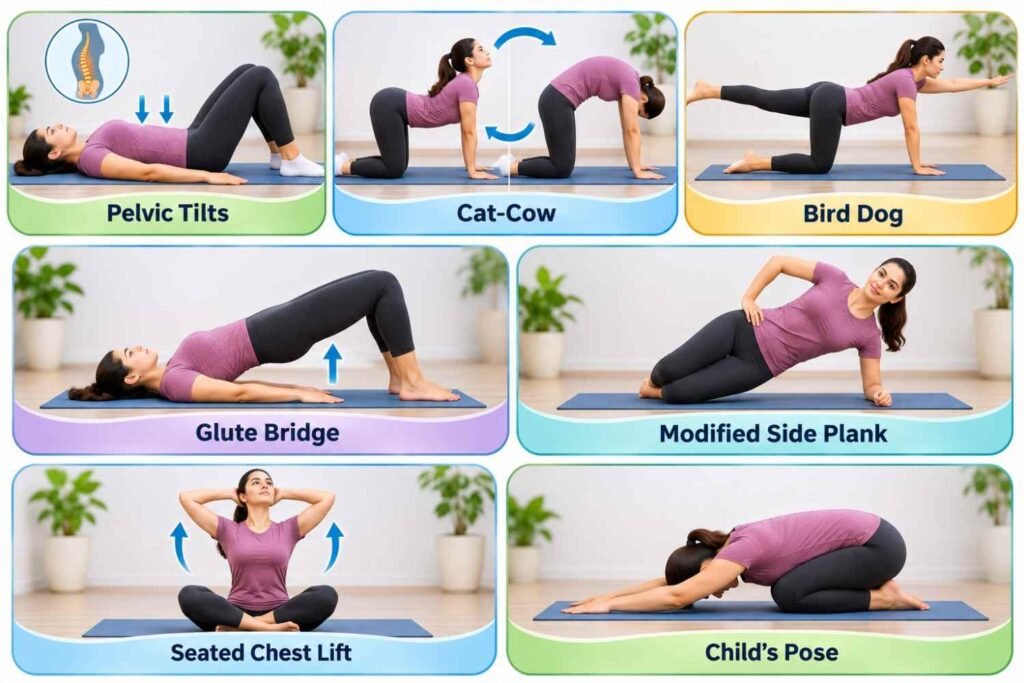
There is no single “best” exercise, and high-quality research is still limited. These are commonly used physical therapy exercises for scoliosis in adults. Move slowly, breathe steadily and stop if you feel sharp pain.
- Pelvic tilts: Lie on your back with knees bent. Gently flatten your lower back into the floor, hold for 5 seconds, and repeat 8 to 10 times.
- Cat-cow: On hands and knees, slowly round then arch your spine for 8 to 10 gentle cycles to ease stiffness.
- Bird dog: Reach one arm and the opposite leg out while keeping your hips level. Hold 5 seconds, 6 to 8 times per side.
- Glute bridge: Lift your hips until shoulders, hips and knees form a line. This strengthens the glutes that support your lower spine.
- Modified side plank: From your knees, keep your elbow under your shoulder and hold 10 to 20 seconds. Your therapist may ask for longer holds on one side.
- Seated chest lift: Hands behind your head, gently lift your chest and hold 5 seconds to improve upper back extension.
- Child’s pose: Sit back on your heels with arms forward and breathe slowly into your back ribs for 30 seconds.
Exercises to treat scoliosis in adults work best when done consistently and adjusted to your curve, so ask for a personalized exercise therapy plan rather than copying a generic routine.
Exercises for Scoliosis Pain in Adults
When pain flares, ease off rather than push through. Gentle walking, pelvic tilts, child’s pose and a warm shower often help. Exercises for scoliosis pain in adults should feel like mild stretching or light muscle work, never sharp, pinching or shooting pain.
Exercises for Lumbar Scoliosis in Adults
When the curve sits in the lower back, tight hips and weak glutes often add strain. Exercises for lumbar scoliosis in adults usually combine bird dog and bridges with a kneeling hip flexor stretch and gentle core bracing.
Exercises for Scoliosis in Older Adults
Balance matters as much as strength after 65, when falls become a bigger risk. Exercises for scoliosis in older adults often add sit-to-stand practice, single-leg standing beside a counter, walking and tai chi. Keep something stable within reach, and see our geriatric physiotherapy care for supervised options.
Exercises and Habits to Avoid
No exercise is banned for everyone, but be careful with movements that cause sharp or radiating pain, heavy overhead lifting, repeated jarring impact if your curve is large or your spine is degenerative, and forceful backbends. Ask your therapist before returning to the gym, yoga or contact sports.
When to See a Doctor First
Get medical advice promptly if you notice leg weakness or numbness, bladder or bowel changes, a curve that seems to be worsening quickly, constant night pain, or unexplained weight loss or fever. These are not typical of scoliosis alone.
Finding Physical Therapy for Adult Scoliosis in Ohio
Ohio allows direct access, so you can book a licensed physical therapist without a physician referral. There are conditions, for example your therapist must refer you on if you are not improving within about 30 days, and some insurance plans still ask for a referral, so check your plan first.
When choosing a clinic, ask:
- Do you have training in Schroth, SEAS or other scoliosis-specific exercises?
- Will you review my X-ray and tailor exercises to my curve?
- Will I get a home program and clear review points?
- How will we measure progress in pain and function, not only curve angle?
About the Author
Dr Roshan Jha (PT) holds BPT and MPT (Orthopedics) degrees and has more than 13 years of clinical experience, including work at Batra Hospital and BLK Super Speciality Hospital. His clinic follows a four-step process: consultation, diagnosis, a personalized therapy plan, and recovery and prevention.
If you are in Delhi NCR, you can book an assessment at Pain Free Physiotherapy in Dwarka.
Frequently Asked Questions
Can physical therapy help adult scoliosis?
Yes. Physical therapy can reduce pain, improve flexibility and strengthen the muscles that support your spine. In adults, the main benefit is better comfort and function. Evidence that it reduces the curve itself is limited, so expect symptom relief first.
What is the best exercise for scoliosis in adults?
There is no single best exercise. Bird dog, pelvic tilts and glute bridges, plus gentle mobility work, are common starting points. Your therapist should adjust them to your curve and pain level.
What exercises should adults with scoliosis avoid?
Avoid anything that causes sharp or radiating pain, heavy overhead lifting, repeated high-impact jarring and forceful backbends if your spine is stiff or degenerative. Get your therapist’s approval before returning to demanding workouts or contact sports.
Can scoliosis be corrected in adults?
Adult curves are usually stiffer than teenage curves, so full correction through exercise is unlikely. Scoliosis-specific exercises may help control progression in some people, and surgery is considered only for severe or disabling cases. Pain relief and function are the realistic goals.
How do you relieve scoliosis pain in adults?
Combine gentle movement, targeted strengthening, posture breaks and heat. Walking, pelvic tilts and stretching often ease flare-ups. If pain is constant, wakes you at night or spreads into your legs, see a doctor before continuing.
Is walking good for scoliosis?
Yes. Walking is low-impact and builds endurance and muscle support. Start with short, comfortable walks and build up. Stop and get advice if walking triggers leg pain, numbness or weakness.
This article is for education and does not replace personal medical advice. Consult a licensed healthcare professional before starting a new exercise program.