




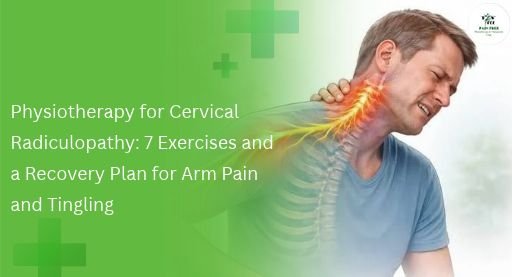
Physiotherapy for Cervical Radiculopathy: 7 Exercises and a Recovery Plan for Arm Pain and Tingling
Physiotherapy for cervical radiculopathy calms an irritated neck nerve using gentle exercise, posture correction, nerve mobility work, and, when suitable, hands-on therapy or traction. Most people improve without surgery, often within weeks to a few months. The goal is to reduce arm pain, tingling, and weakness while rebuilding neck and shoulder blade strength.
A shooting pain from your neck into your arm. A thumb that keeps tingling. A grip that feels weaker than it did last month. It is frightening, but this is one of the neck conditions that responds best to conservative care. This guide explains what a physical therapist actually does, which exercises are worth trying, what to avoid, and the warning signs that mean you should see a doctor first.
What Is Cervical Radiculopathy?
Cervical radiculopathy is a pinched or inflamed nerve root in the neck, one of the conditions we cover in our neck pain guide. It is usually caused by a herniated disc or by age-related wear known as cervical spondylosis, and it most often affects adults in their 40s to 60s.
Typical symptoms are radiating arm pain, numbness, tingling, and weakness. The level matters. A C5-C6 disc usually irritates the C6 nerve root, causing symptoms in the thumb and index finger and weakness in the biceps and wrist. A C4-C5 disc affects the C5 root, causing shoulder and upper arm pain and deltoid weakness. Unlike ordinary stiffness, this is nerve-driven pain, so treatment targets the nerve as well as the neck.
How Physiotherapy for Cervical Radiculopathy Works
A good program starts with a hands-on assessment of reflexes, muscle strength, sensation, and neck movement. This confirms the nerve is involved and rules out look-alikes such as carpal tunnel syndrome or a rotator cuff problem. Your therapist then builds a plan that may include:
- Education and symptom-easing positions: finding postures that calm the nerve, plus changes to your desk, phone use, and sleep setup.
- Deep neck and shoulder-blade strengthening: the backbone of rehab, supported by research reviews showing exercise is beneficial.
- Nerve mobility work: gentle gliding movements that help the nerve move more freely.
- Manual therapy and traction: helpful for some people, but the evidence is mixed, so these are add-ons rather than the whole plan.
- Graded return to activity: a steady build-up to work, driving and lifting.
The research is encouraging. A randomized trial published in the BMJ found that six weeks of physiotherapy with home exercises reduced neck and arm pain more than a wait-and-see approach in recent-onset cases. Structured physiotherapy is also commonly tried before surgery is considered. A typical cervical radiculopathy physical therapy treatment course runs four to six weeks, with a short home program between visits.
7 Cervical Radiculopathy Exercises Physical Therapy Often Starts With
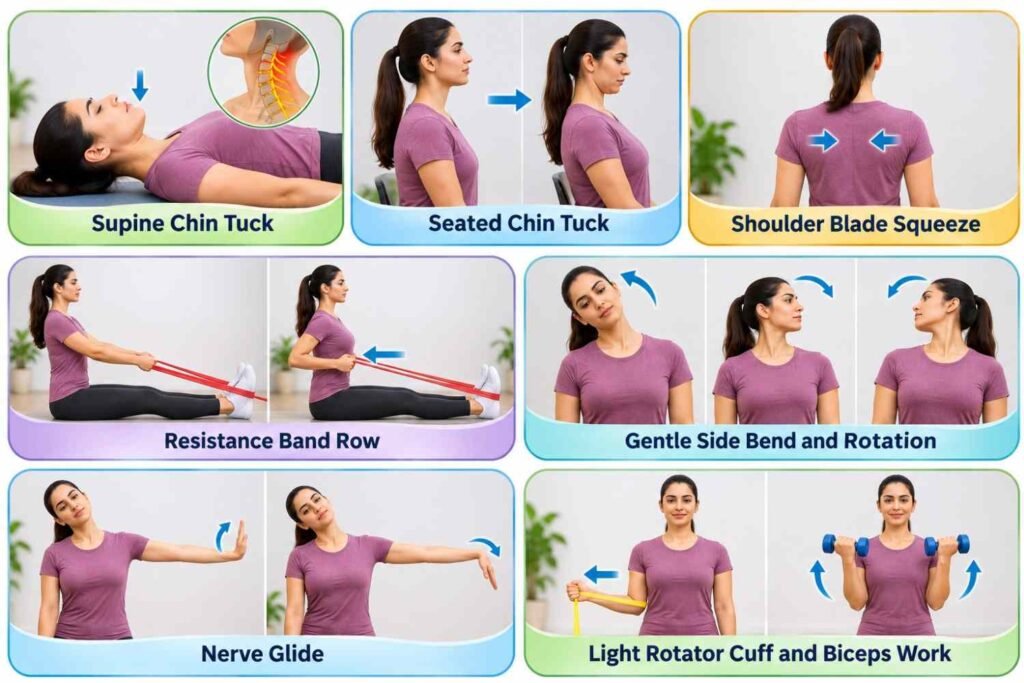
These cervical radiculopathy exercises physical therapy programs commonly begin with are gentle. Work within a pain-free range. Mild arm tingling that settles quickly is acceptable, but stop if arm symptoms spread or intensify, and check with a clinician before starting.
- Supine chin tuck: Lie on your back, gently nod your chin, and press the back of your head into the surface. Hold for 5 seconds; repeat 10 times to wake up the deep neck flexors.
- Seated chin tuck: Sit tall and glide your head straight backwards without tilting. Hold 5 seconds; 10 to 15 repetitions.
- Shoulder blade squeeze: Draw your shoulder blades back and down; hold for 5 seconds, and repeat 10 to 15 times.
- Resistance band row: Pull a light band toward you with elbows bent, squeezing the shoulder blades together. Do 10 to 15 slow repetitions.
- Gentle side bend and rotation: Move your neck slowly within a comfortable range to restore motion, 5 to 10 times each way.
- Nerve glide: With your arm out to the side, gently alternate head tilt and wrist movement in a rhythmic slide, never a held stretch. Your therapist will show the version that suits your nerve.
- Light rotator cuff and biceps work: Once pain settles, add band external rotation and biceps curls if the arm feels weak.
Most cervical radiculopathy therapy exercises work best short and often, with two or three brief sessions a day rather than one long one. Ask for a personalized exercise therapy plan rather than copying a generic routine.
Exercises for C5 C6 Radiculopathy
Exercises for C5 C6 radiculopathy follow the same early steps. Once pain settles, your therapist adds strengthening for the muscles the nerve supplies: shoulder muscles for C5, and biceps and wrist extensors for C6. Some clinicians and older textbooks call this cervical root syndrome. A cervical root syndrome exercise plan follows the same principle: unload the nerve first, strengthen second, and progress as symptoms allow.
What to Avoid
- Long periods looking down at a phone or laptop. Posture habits such as rounded shoulders can keep the nerve irritated.
- Heavy shrugs, upright rows, and headstands, which load the neck.
- End-range backwards bending combined with turning toward the painful side. Backward bending eases some people but aggravates others, so let your therapist test it.
- Forceful neck cracking. Accept hands-on treatment only after a proper nerve and red-flag screening.
- Sleeping with your neck bent. Use one supportive pillow on your back or two on your side.
When to See a Doctor Urgently
See a doctor promptly for progressive or severe arm weakness, clumsy hands (trouble with buttons or handwriting), balance or walking problems, or bladder or bowel changes, which can signal spinal cord involvement. Fever, unexplained weight loss, or a recent injury also needs medical review. Chest pressure, shortness of breath, or left arm pain is an emergency, not a neck problem. If symptoms have not improved after about 12 weeks, ask about further evaluation. Our guide on when to see a physiotherapist for neck pain can help you decide.
Physical Therapy for Cervical Radiculopathy in Ohio
Ohio allows direct access, so you can book a licensed physical therapist without a physician referral. There are conditions; for example, your therapist must refer you on if you are not improving within about 30 days, and some insurance plans still ask for a referral, so check your plan first.
When choosing a clinic, ask:
- Will you test reflexes, strength, and sensation to confirm the nerve level?
- Do you have orthopaedic or manual therapy speciality training?
- Will I get a progressive home program?
- When would you send me back to a physician?
About the Author
Dr. Roshan Jha (PT) holds BPT and MPT (Orthopaedics) degrees and has more than 13 years of clinical experience, including work at Batra Hospital and BLK Super Speciality Hospital. His clinic follows a four-step process: consultation, diagnosis, a personalized therapy plan, and then recovery and prevention.
If you are in Delhi NCR, you can book an assessment at Pain Free Physiotherapy in Dwarka.
Frequently Asked Questions
Can physiotherapy cure cervical radiculopathy?
Often it resolves the symptoms, though “cure” depends on the cause. Up to about 90% of cases improve with conservative care such as exercise and physical therapy. Disc or joint changes may remain on a scan even after pain, tingling and strength recover.
What is the best physical therapy for cervical radiculopathy?
No single technique is best. The most reliable approach is an active program of deep neck and shoulder-blade strengthening, posture education and nerve glides, with manual therapy or traction added for some people. Your therapist should tailor it to your nerve level.
What exercises should you avoid with cervical radiculopathy?
Avoid long forward-head postures, heavy shrugs and upright rows, headstands and any move that sends arm pain or tingling further down the arm. Be careful with backward bending and turning toward the painful side until your therapist has tested it.
How long does it take to recover from cervical radiculopathy with physical therapy?
Many people notice improvement within the first few weeks, and most settle over several weeks to a few months. If arm symptoms have not improved after about 12 weeks, ask your doctor about further evaluation.
How should you sleep with cervical radiculopathy?
Keep your neck in line with your spine. Use one supportive pillow if you sleep on your back, or two if you sleep on your side, so your head is not bent forward or sideways.
Does cervical radiculopathy need surgery?
Most people do not need it. Surgery is usually considered for severe or worsening weakness, spinal cord involvement, or symptoms that do not improve after about 12 weeks of proper conservative care. Studies show structured physiotherapy alone can match surgery on several outcomes for many people.
This article is for education and does not replace personal medical advice. Consult a licensed healthcare professional before starting a new exercise program.